Perspektivwechsel
How can God allow this to happen??
According to United Nations statistics1, one in eleven people on Earth suffers from chronic hunger. This means they do not get enough food to survive in the long term. One in eleven people wakes up hungry in the morning and will go to sleep hungry at night—without ever having the chance to eat their fill.
Then there are the wars in Israel, the Gaza Strip, Ukraine, and many other countries around the world—with all the suffering these conflicts bring to the people.
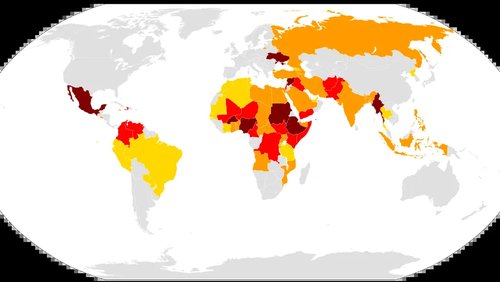
Ending world hunger and putting an end to wars is a task of almost unimaginable magnitude. At the same time, there are many other challenges that seem just as insurmountable: nature is increasingly losing its balance; right-wing or fascist ideologies are gaining popularity in more and more countries. The number of dictatorships is rising, and human rights are becoming increasingly difficult to defend. Furthermore, some regimes use available food supplies as a political lever. Large quantities of food are destroyed in order to exert pressure on other countries by exploiting the suffering of those starving.
That’s the situation we’re living in. We see it every day on the news.
This really bothers me. It can’t be that the world is going to the dogs and that there’s no solution from God. After all, we Christians believe in a God whom the Bible says is love. But if that’s true, how can He allow so much suffering?
This question is not new. People have been grappling with it since ancient times2. It is the question of the justice of God or the justification of God: How can a God whom we describe as good allow suffering in the world?3 Philosophers and theologians have repeatedly tried, in vain, to find a satisfactory answer. Karl Barth, described by some as the most important theologian of the 20th century, came to the conclusion that there is no solution to this problem.
Even Jesus could not find an answer to this question. In the end, he was all alone, forsaken by his God.
Abandoned by God? Perhaps our theology tells us that this cannot be. But Jesus, at least, felt that way. His last words before his death were:
My God, my God, why have you forsaken me? (Mk 15: 34; NIV)
To put it another way
So the question of why God allows all this suffering remains unanswered. But I find myself wondering more and more often: Could it be that we’re asking the question the wrong way? That it’s simply not the right question?
If God is love: Does God perhaps ask us, “Why do you allow this to happen?”
- Why is cheap natural gas from Russia or oil from Arab countries more important to you than human lives?
- Why is your prosperity more important to you than people who are starving?
- How can you not care that in poor countries, seven-year-old children have to toil in mines so there will be enough raw materials for your cell phones?4
Perhaps God says:
- I have given you everything so that you may all have a life worth living.
- Why don’t you use it, but instead hoard it and spend it on yourselves?
Could it be that God sees the situation in Israel, in Ukraine, and throughout the world in a completely different way than we do?
- If God is love, it must break His heart to see His children tormenting one another.
- If He is love, it must cause Him infinite pain to see that we allow all of this to happen.
I think the question isn’t, “How can God allow this to happen?” but rather, “How can we allow this to happen?” And, “What can we do differently? What can we do to combat suffering in the world?”
But what should we do?
Perhaps it’s a start to ask very specifically: “What can I do today? Where do I have the opportunity today to take even the smallest step toward peace?”
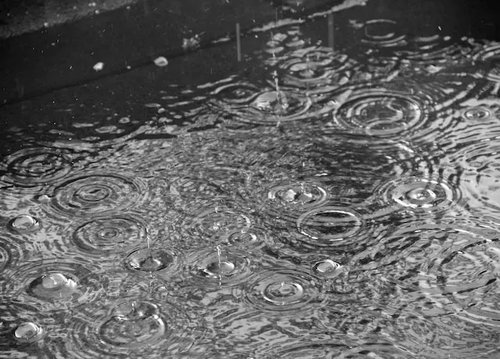
Even the greatest misfortune and suffering had, at some point, a very small beginning.
A wrong word, an insensitive reaction, a selfish decision. Even the hatred between peoples arose long ago from a tiny seed. Over generations, this plant then grew until it had stifled all respect for others and all compassion.
That’s discouraging. How can we change structures that have developed over such a long period of time?
But perhaps the beginning of major conflicts also points us toward their resolution.
If a tiny impulse can lead to insurmountable conflicts—why shouldn’t the small impulse we set in motion when talking to our neighbor have the same impact? The small act of kindness with which we greet a homeless person? The extra minutes we give a child to answer their questions?
Perhaps all of this is like a stone we throw into the water. No matter how small it is, it creates ripples that are so much larger than itself. We shouldn’t underestimate the small things we can do.
Every person has the power to make a difference. And it’s up to each of us to decide which direction we steer that influence.
Food for thought:
- Can I think of someone I can do something nice for today?
- Is there anyone in my life who is alone, who is being treated unfairly, or who doesn’t have enough to live on?
- Where do I see discord? Can I promote peace?
If these questions have given you an idea, hold on to that thought. Follow your intuition. Throw your little pebble into the water.
And then trust in God.
Figures:
- Current Wars: Futuretrillionaire, CC BY-SA 3.0, via Wikimedia Commons
- Raindrops:_ Yara, on Unsplash

Footnotes:
-
Hunger: Verbreitung, Ursachen & Folgen - Welthungerhilfe ↩
-
For example, Epicurus (341–271 B.C.) posed this question very clearly. ↩
-
In theology, this problem is known as the “theodicy” question. ↩
-
Democratic Republic of Congo: “This is what we die for”: Human rights abuses in the Democratic Republic of the Congo power the global trade in cobalt - Amnesty International. ↩