Beyond Perfection
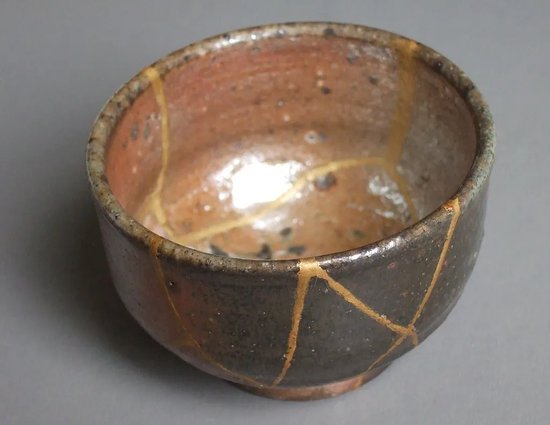
A few years ago, I first heard about the Japanese art of kintsugi. In this art form, broken clay vessels such as cups, bowls, or jugs are not thrown away, but are repaired in a remarkable way and transformed into valuable, elegant objects.
Normally, we tend to throw away a broken vessel because it has lost its value and usefulness to us. Hardly anyone will go to the trouble of buying glue and piecing the shards back together. Who wants to have cups with glued-on handles in their cupboard? Even with the most careful work, the damage will always remain visible.
Kintsugi takes a different approach. Instead of using an invisible adhesive, the artist uses a golden paste. The cracks are emphasized rather than hidden. The vessel’s history is revealed. Indeed: its unfortunate history becomes the foundation of its value.
I see parallels here with the way Jesus treated people who weren’t flawless or perfect. At the beginning of his ministry, in his inaugural address, he says:
The Spirit of God has sent me to heal the brokenhearted and to set the captives free. (based on Luke 4:18–19)
In saying this, Jesus is referring to texts that were written centuries before his time. Time and again, we find images of God in the ancient scriptures that remind me of kintsugi artists. For example:
The Lord is close to the broken-hearted and saves those who are crushed in spirit. (Ps. 34, 18; NIV)
3 He heals the broken-hearted. (Ps. 147, 3 a; NIV)
Jesus embodied these words throughout his life. He saw his mission as freeing and healing broken people. He saw those who lived on the margins of society: the despised, the outcasts—the broken.
Jesus saw the cracks and wounds in their lives. But unlike everyone else, he did not condemn these people. He began right there, healed them, absolved them of guilt, and restored their dignity. He did not join in the blame game—quite the opposite. Before he healed a blind man—whose blindness had everyone wondering what sin it was a punishment for—Jesus said:
‘Neither this man nor his parents sinned,’ said Jesus, ‘but this happened so that the works of God might be displayed in him. (John 9, 3)
Jesus wasn’t looking for someone to blame. He didn’t need a scapegoat. Instead, he healed people.
When we treat people who are broken in this way, it reflects how Jesus lived. He restores people, not by simply making their brokenness disappear. He puts the pieces back together through love, care, and the glory of God. Through this “golden glue,” what was broken becomes something much greater that reveals God’s glory without denying the past.
Food for thought:
-
Do I see mostly what is broken in my life? Do my thoughts revolve around losses and disappointments?
-
Can I perhaps discover God’s action—His protection, His healing—in my struggles?
-
Do I recognize the eternal value that God has given me by integrating these fractures into my new self, which is permeated by God’s healing touch?
-
And what about other people? Do I notice, above all, their weaknesses, their failures, their imperfections?
-
Or can I also see in their lives that they are filled with signs of God?